Lab-2-3
(2.5% of the course mark)
React CSS Lab
- A hands-on lab exploring how to set up a React project with Vite and integrate popular CSS frameworks such as Bootstrap, Bulma, and Tailwind CSS and use Vite's built-in tools to build their project for production.
Lab objectives
-
Install and configure Bootstrap, Bulma, and Tailwind CSS in a Vite project.
-
Apply CSS framework classes to style React components.
-
Build the project for production using
npm run build.
Create basic React app
- On VSCode, open the terminal and enter the following command:
npm create vite@latest react-css-app -- --template react
- Clean up the project by doing the following:
- In the src folder, update main.jsx and remove the following code:
import "./index.css";
- In the src folder, update App.jsx and overwrite the contents by copying the following code:
// Developer:
// Purpose:

function App() {
  return <h1>First React App</h1>;
}

export default App;
-
Delete the following:
-
Folder:
- src/assets
-
File:
-
src/App.css
-
src/index.css
-
-
- Open your browser and navigate to: http://localhost:5173, changes should be displayed immediately.
-
Ensure that you are able to see the latest changes in the browser after the project clean up.
-
Do not not proceed to the next step until you have verified that the project is still working.
Add Bootstrap
- In the terminal, install Bootstrap by running the following command:
npm install bootstrap
- In the terminal, install Popper by running the following command:
npm install @popperjs/core
- In the src folder, update main.jsx with the following css import statements:
import "bootstrap/dist/css/bootstrap.min.css";
import "bootstrap/dist/js/bootstrap.bundle.min.js";
Ensure this file has no other CSS imports besides the one above, as doing so may cause inconsistencies in the output.
- In the src folder, update App.jsx with the following code.
function App() {
  return (
    <div className="container">
      <h1>Bootstrap Demo {`${new Date()}`}</h1>
      <div className="alert alert-primary" role="alert">
        alert alert-primary
      </div>
      <div className="alert alert-secondary" role="alert">
        alert alert-secondary
      </div>
      <div className="alert alert-success" role="alert">
        alert alert-success
      </div>
      <div className="alert alert-danger" role="alert">
        alert alert-danger
      </div>
      <div className="alert alert-warning" role="alert">
        alert alert-warning
      </div>
      <div className="alert alert-info" role="alert">
        alert alert-info
      </div>
      <div className="alert alert-light" role="alert">
        alert alert-light
      </div>
      <div className="alert alert-dark" role="alert">
        alert alert-dark
      </div>
    </div>
  );
}

export default App;
In JSX, the attribute used to apply CSS classes is className instead of the standard HTML class attribute. This is because class is a reserved keyword in JavaScript (Used for defining classes in ES6) and since JSX is a syntax extension of JavaScript, using class directly would cause syntax errors.
- In the terminal, run the following command:
npm run dev
-
Take a screenshot of the browser output and save it as react-bootstrap.png.
-
Press
ctrl-cto stop the app. -
In the terminal, start the build process by running the following command:
npm run build
- Pay attention to the terminal output, it should display the app's bundle size. Take a screenshot and save it as react-build-bootstrap.png.
Add Bulma
- In the terminal, install Bulma by running the following command:
npm install bulma
- In the src folder, update main.jsx with the following css import statements:
import "bulma/css/bulma.min.css";
Ensure this file has no other CSS imports besides the one above, as doing so may cause inconsistencies in the output.
- In the src folder, update App.jsx and the following code:
function App() {
  return (
    <section className="section">
      <h1 className="is-size-1">Bulma Demo {`${new Date()}`}</h1>
      <div className="container">
        <div className="notification is-primary">notification is-primary</div>
        <div className="notification is-info">notification is-info</div>
        <div className="notification is-success">notification is-success</div>
        <div className="notification is-warning">notification is-warning</div>
        <div className="notification is-danger">notification is-danger</div>
        <div className="notification is-white">notification is-white</div>
        <div className="notification is-black">notification is-black</div>
      </div>
    </section>
  );
}

export default App;
- In the terminal, run the following command:
npm run dev
-
Take a screenshot of the browser output and save it as react-bulma.png.
-
Press
ctrl-cto stop the app. -
In the terminal, start the build process by running the following command:
npm run build
- Pay attention to the terminal output, it should display the app's bundle size. Take a screenshot and save it as react-build-bulma.png.
Add Tailwind
- In the terminal, install Tailwind and Vite plugin by running the following command:
npm install -D tailwindcss @tailwindcss/vite
- In the root of the app, update vite.config.js and add the following code:
import { defineConfig } from "vite";
import react from "@vitejs/plugin-react";
import tailwindcss from "@tailwindcss/vite";

export default defineConfig({
  plugins: [react(), tailwindcss()],
});
- In the src folder, create a file named: style.css and add the following code:
@import "tailwindcss";
- In the src folder, update main.jsx with the following css import statements:
import "./style.css";
Ensure this file has no other CSS imports besides the one above, as doing so may cause inconsistencies in the output.
- In the src folder, update App.jsx with the following code:
function App() {
  return (
    <div className="m-4">
      <h1 className="mb-2 text-3xl font-bold">
        Tailwind Demo {`${new Date()}`}
      </h1>

      <div className="mb-2 px-4 py-3 rounded bg-blue-100 border border-blue-300 text-blue-900 text-sm">
        mb-2 px-4 py-3 rounded bg-blue-100 border border-blue-300 text-blue-900
        text-sm
      </div>

      <div className="mb-2 px-4 py-3 rounded bg-green-100 border border-green-300 text-green-900 text-sm">
        mb-2 px-4 py-3 rounded bg-green-100 border border-green-300
        text-green-900 text-sm
      </div>

      <div className="mb-2 px-4 py-3 rounded bg-yellow-100 border border-yellow-300 text-yellow-900 text-sm">
        mb-2 px-4 py-3 rounded bg-yellow-100 border border-yellow-300
        text-yellow-900 text-sm
      </div>

      <div className="mb-2 px-4 py-3 rounded bg-red-100 border border-red-300 text-red-900 text-sm">
        mb-2 px-4 py-3 rounded bg-red-100 border border-red-300 text-red-900
        text-sm
      </div>

      <div className="mb-2 px-4 py-3 rounded bg-gray-100 border border-gray-300 text-gray-900 text-sm">
        mb-2 px-4 py-3 rounded bg-gray-100 border border-gray-300 text-gray-900
        text-sm
      </div>

      <div className="mb-2 px-4 py-3 rounded bg-indigo-100 border border-indigo-300 text-indigo-900 text-sm">
        mb-2 px-4 py-3 rounded bg-indigo-100 border border-indigo-300
        text-indigo-900 text-sm
      </div>
    </div>
  );
}

export default App;
In JSX, the attribute used to apply CSS classes is className instead of the standard HTML class attribute. This is because class is a reserved keyword in JavaScript (Used for defining classes in ES6) and since JSX is a syntax extension of JavaScript, using class directly would cause syntax errors.
- In the terminal, run the following command:
npm run dev
-
Take a screenshot of the browser output and save it as react-tailwind.png.
-
Press
ctrl-cto stop the app. -
In the terminal, run the following command:
npm run build
- Pay attention to the terminal output, it should display the app's bundle size. Take a screenshot and save it as react-build-tailwind.png.
Submission
- Create a folder named submit.
Delete the node_modules folder on any app that you are submitting.
-
Copy the react-css-app and all the screenshots (react-bootstrap.png, react-build-bootstrap.png, react-bulma.png, react-build-bulma.png, react-tailwind.png, and react-build-tailwind.png.) to the submit folder.
-
Create a zip file of the submit folder.
-
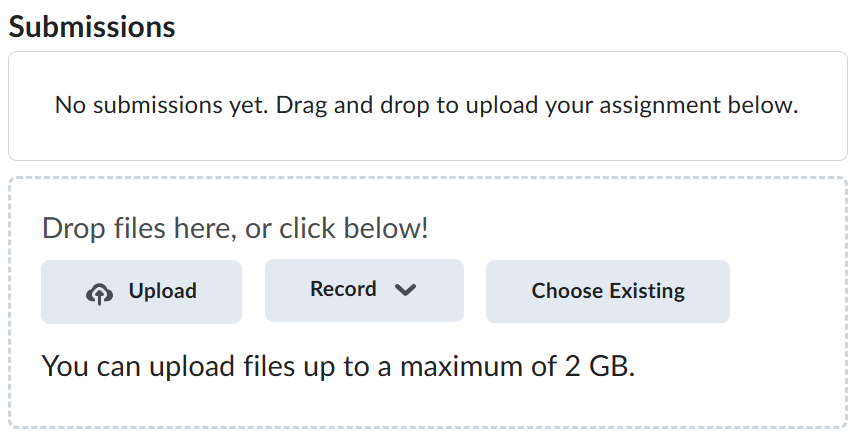
Navigate back to where the lab was originally downloaded, there should be a Submissions section (see below) where the zip file can be uploaded.